Home Warranties for Older Homes: A 2026 Guide
Quick answer: Every major provider will happily sell a warranty on your 1972 ranch, no inspection required. The catch lives in the claims process, not the application. Older systems get denied through three contract doors: pre-existing conditions, improper installation by some long-gone handyman, and code violations that did not exist when the house was built. You can buy around a lot of that by choosing contract language carefully, documenting your systems on day one, and being realistic about payout caps against 2026 repair prices.
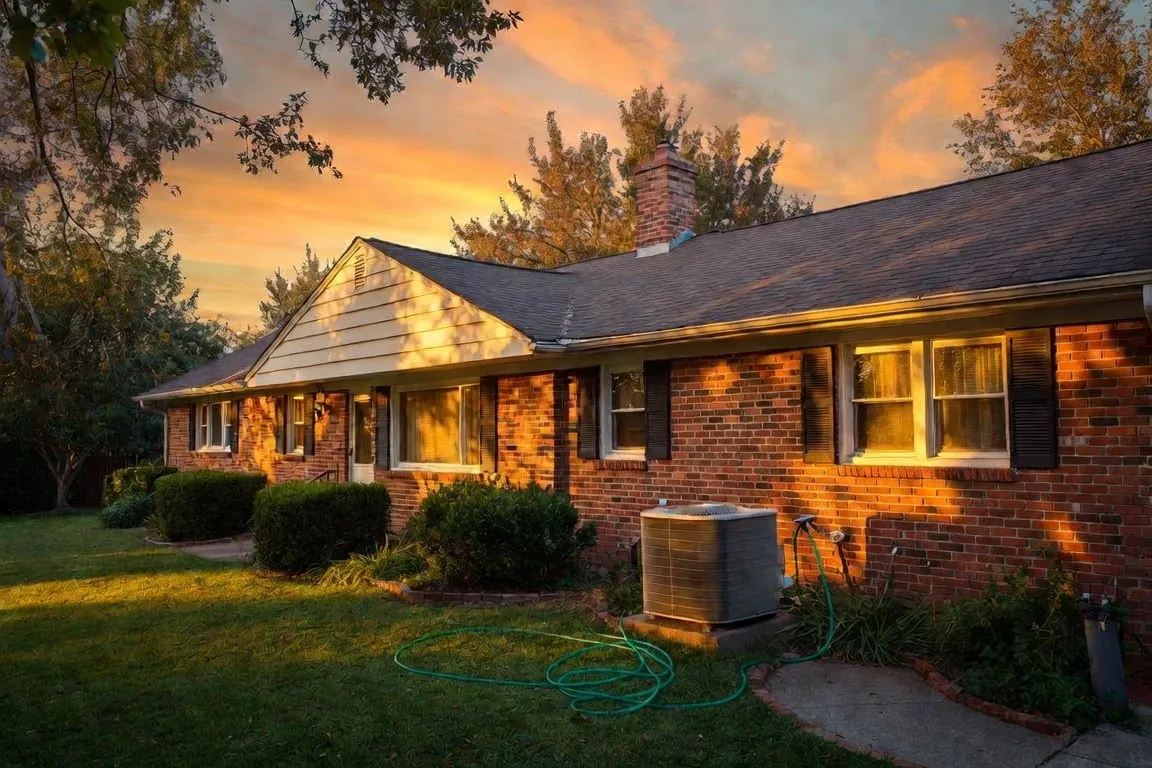
If you own an older home, I want you to know something before the worry sets in: you are not the exception anymore. You are the country. The median owner-occupied home in America is now 42 years old, up from 31 two decades ago, and almost half of us live in houses built before 1980. Redfin found that homes purchased in 2024 were the oldest on record, a median of 36 years. When your house creaks, it creaks in very good company.
I sold houses in the Pacific Northwest for ten years, and the buyers who lost the most sleep were never the ones buying new construction. They were the ones falling in love with a 1968 brick ranch, standing in the utility room during inspection, staring at a furnace older than they were. The question they always asked me, quietly, like a confession: "Can I even get a warranty on this?"
Yes. You can. Nobody will stop you. And that is exactly where you need to slow down, because the industry's yes is not the same as your yes.
The application says yes, the claim decides
Here is the pattern I want you to see clearly. None of the big five providers imposes an age-of-home cutoff. American Home Shield says outright that you can enroll without an inspection or maintenance records. Liberty Home Guard writes blog posts courting older-home buyers. Select says the age of your systems does not matter as long as they work when the policy starts.
The screening happens later, in language like this, from Choice Home Warranty's user agreement: "Known or unknown pre-existing conditions are not covered." Liberty's sample policy echoes it and adds exclusions for "improper installation, repair, matching, sizing, or modification... whether performed by You or a third party." That third-party clause matters more in an older house than anywhere else, because in a 50-year-old home, you are the third or fourth owner of every mistake ever made in that crawlspace. The furnace some previous owner's brother-in-law installed slightly wrong in 1998 can void your claim in 2026, even though you never met the man.
The third door is code. Choice's contract says it is not responsible for bringing anything up to current building code, and grandfathering does not help you here: your electrical panel can be perfectly legal in your county and still fail a warranty company's standards test. When a covered repair requires code upgrades, the upgrade cost is usually yours.
I am not telling you this to scare you off. I am telling you because the difference between homeowners who feel protected and homeowners who feel betrayed is almost never the house. It is whether anyone showed them these three doors before they signed.
Know which of your systems is living on borrowed time
The gentlest thing you can do for your future self is a ten-minute inventory. The inspection industry's standard lifespan tables say a central air conditioner lasts 7 to 15 years, a furnace 15 to 25, a tank water heater 6 to 12, and an electrical panel about 60. Now set those numbers against what replacement costs in 2026: a full furnace-and-AC replacement averages around $7,500 and can reach $12,500; a water heater around $2,600 installed; a whole-house repipe about $7,500; a panel upgrade $1,200 to $2,000 and climbing if service capacity changes.
| System | Typical lifespan | 2026 replacement cost | Older-home coverage reality |
|---|---|---|---|
| Central AC | 7 to 15 years | $3,900 to $8,000 | Coverable, but payout caps commonly $2,000 to $5,000 |
| Furnace | 15 to 25 years | $2,800 to $6,900 | Coverable; watch improper-installation clauses |
| Tank water heater | 6 to 12 years | Roughly $1,500 to $3,900 | Usually the smoothest older-home claim |
| Electrical panel | About 60 years | $1,200 to $2,000 typical | Code-driven replacement generally excluded |
| Galvanized or polybutylene plumbing | End of life now | Repipe about $7,500 | Often excluded by name; Liberty's contract lists both |
Two special cases deserve their own sentence. If your home has polybutylene pipes, installed widely from the late 1970s through the mid 1990s, or galvanized supply lines, know that Liberty Home Guard's sample policy excludes both by name, and homeowners insurance carriers are not fond of them either. And if your inspector ever says the words "Federal Pacific panel," treat replacement as a when, not an if: no warranty names that brand in its exclusions, but a defect documented publicly for decades walks through the known-condition door every time.
We wrote about the emotional weight of exactly this in the water heater aging question, and the honest budget math lives in our home warranty cost guide.
How to buy coverage for an older home without regret
Pick the contract, not the ad. For older homes specifically, American Home Shield's posture is genuinely different: its plans cover breakdowns from normal wear, rust, corrosion, and even undetectable pre-existing conditions, meaning problems a visual inspection or simple test would not have caught. That single clause absorbs a lot of what makes older-home claims fail elsewhere. First American sells upgrade tiers that buy back code-violation and improper-installation coverage, which is the same idea sold à la carte. If you want to compare what that protection costs against a budget option, Choice will quote you in a couple of minutes; just go in knowing its pre-existing exclusion is absolute, so it fits best when your systems are old but demonstrably healthy.
Document day one. Photograph every system running the week your coverage starts: thermostat showing cooling, water heater with the date sticker visible, panel with the door open. If a company ever argues your failure predates the policy, contemporaneous proof that everything worked is the quietest, most powerful rebuttal there is.
Mind the caps against real prices. A $5,000 HVAC cap sounds generous until it meets a $7,500 replacement. The gap is yours. Caps are in the fine print, never the headline.
Keep maintenance receipts. Lack-of-maintenance is the fourth door I did not give its own section, because the fix is so simple: an annual HVAC service visit and a water heater flush, receipts saved to one folder. Fifty dollars of paper trail has won more appeals than any lawyer.
And run the honest alternative. For some older homes, especially ones where you would be self-insuring a single elderly system rather than a houseful, a dedicated repair fund beats a premium. We walked that math without flinching in home warranty versus emergency fund, and the broader decision framework is in how to decide if a home warranty is worth it.
The peace-of-mind part
The reason older-home owners buy warranties was never really the arithmetic. It is that a 42-year-old house speaks a language of small noises, and every one of them, at 2 a.m., sounds like money. A warranty quiets some of that. It will quiet more of it if you buy it with clear eyes: know your systems' ages, know the three doors, photograph everything, and choose the contract whose language matches your house's actual condition rather than the one with the friendliest television ad.
Your house has been standing since before you could drive. With the right paperwork behind it, it is not a liability. It is just a home that needs its story written down.
Sources: NAHB housing stock analysis (March 2026, 2024 American Community Survey data), Redfin aging-inventory research, InterNACHI standard life expectancy chart, Angi 2026 HVAC and repipe cost guides, and provider contract documents fetched August 2026, including Choice Home Warranty's user agreement and Liberty Home Guard's sample policy. Contract terms change; verify the current language on the provider's own document before you buy.
Frequently Asked Questions
Do home warranty companies refuse older homes?
No major provider imposes an age-of-home limit or requires an inspection. The risk to you is not rejection at signup; it is denial at claim time through pre-existing-condition, improper-installation, and code-violation exclusions, which all fire more often on older systems.
What is the best home warranty for a house built before 1980?
Prioritize contract language over price. American Home Shield covers undetectable pre-existing conditions and wear-related failures, which suits homes with old but functioning systems. First American's upgrade tiers buy back code and installation coverage. Budget carriers with absolute pre-existing exclusions fit older homes only when your systems are healthy and you can prove it.
Will a warranty cover my galvanized or polybutylene plumbing?
Often not: Liberty Home Guard's sample contract excludes both by name, and other carriers reach the same result through pre-existing or known-defect language. Budget a repipe, roughly $7,500 on average in 2026, as an out-of-pocket project rather than a claim.
Does a home warranty cover bringing things up to code?
Generally no. Contracts exclude work required to meet current building code, and local grandfathering does not bind the warranty company. When a covered replacement triggers required code upgrades, expect the upgrade portion of the bill to be yours unless you bought a specific code-coverage upgrade.