When Your Water Heater Starts Acting Up: What's Covered, What Isn't, and What to Do
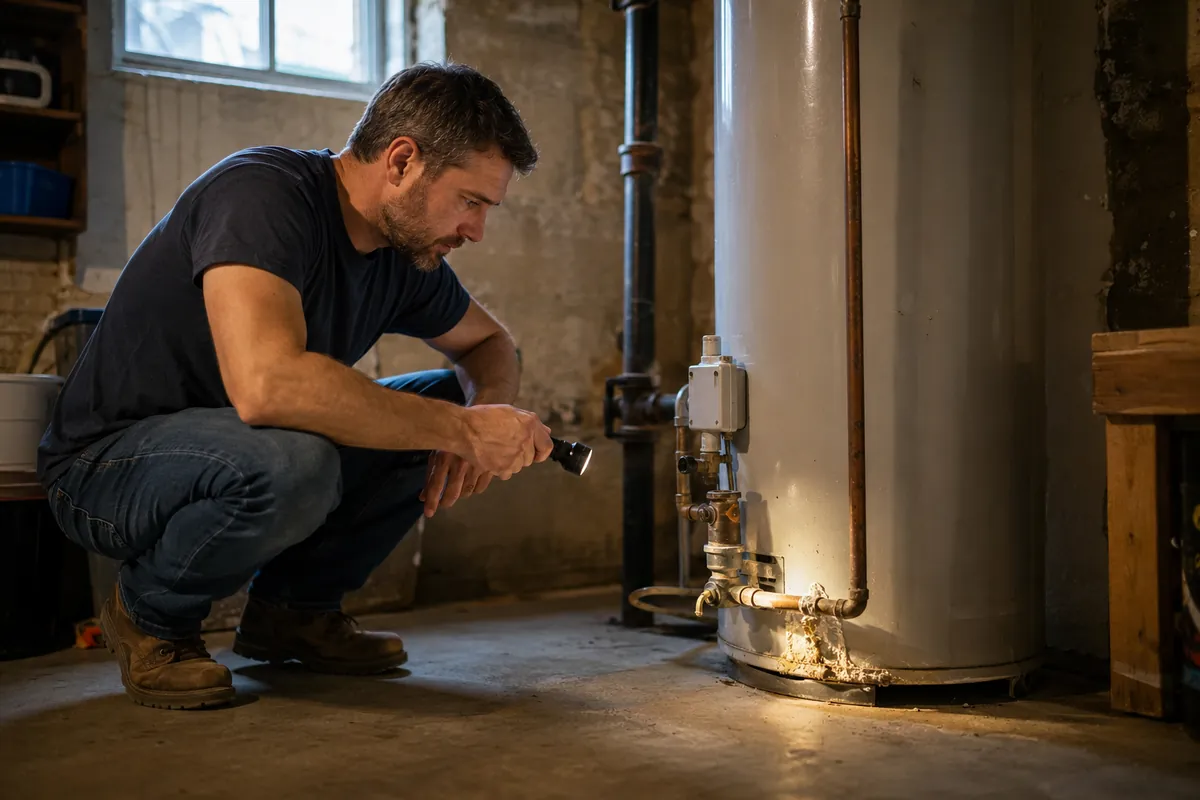
The water heater is the appliance most homeowners never think about until cold water comes out of the hot tap or a small puddle appears in the basement. This FAQ covers the questions readers ask once that has happened: how long should it have lasted, why does a swap cost so much, and what is the home warranty actually going to do for me. The answers are practical, with 2026 numbers from the plumbing trade and current home warranty contract language.
Here is the quick picture of how each kind of water heater ages and what coverage usually does for it, before the details below.
| Water heater type | Typical lifespan | Installed cost (2026) | Typical warranty cap |
|---|---|---|---|
| Tank (gas or electric, 40 to 50 gal) | 10 to 13 years | $1,200 to $2,800 | $1,000 to $2,500 per event |
| Tankless gas | 18 to 25 years | $3,000 to $6,500 | $1,000 to $2,500 per event |
| Heat pump (hybrid) | 12 to 15 years | $2,500 to $5,500 | Varies; refrigerant work often excluded |
*Lifespan and cost ranges are 2026 figures from Angi, HomeGuide, and the ENERGY STAR water heater program. Coverage caps come from typical home warranty contracts; code-required upgrades (expansion tank, drain pan, straps) are usually not covered. Read your own plan and confirm current pricing before relying on it.
Common questions
Is a hot water heater covered under a home warranty?
Yes, on every major home warranty plan, the water heater itself is a covered component. The plan typically covers diagnosis, repair, and replacement of the tank or tankless unit when a mechanical breakdown occurs due to normal wear and tear. The catches: code-required upgrades (expansion tank, drain pan, earthquake straps, seismic gas valve) are typically not covered, even when the building department requires them as a condition of replacement. Refrigerant work on heat pump water heaters is often excluded. The per-event cap (typically $1,000 to $2,500 depending on plan tier) may not cover the full replacement cost in markets with higher labor rates. Read your specific plan's water heater coverage language; the difference between brands is meaningful.
What's the average cost to swap out a water heater?
A standard 40 to 50 gallon gas or electric water heater swap runs $1,200 to $2,800 installed in most US markets in 2026, including the unit, labor, disposal of the old tank, and code-required updates. Tankless gas water heaters run $3,000 to $6,500 because of additional venting and gas line work. Heat pump water heaters (eligible for federal and many state rebates, and listed among efficient options by ENERGY STAR) run $2,500 to $5,500 installed. Markets with high labor rates (California coastal, Boston, NYC, Seattle) sit at the upper end of these ranges; lower-cost rural markets sit at the lower end. The unit itself is typically less than half the total bill; labor, code upgrades, permit, and disposal account for the rest.
How many years does a hot water heater typically last?
A standard tank-style gas or electric water heater lasts 10 to 13 years on average; the manufacturer's tank warranty (commonly 6, 9, or 12 years) is a reasonable lower bound. Tankless units last 18 to 25 years with annual descaling maintenance. Hard water shortens both lifespans significantly; treated soft water extends them. The most common failure modes are anode rod consumption (replaceable for $150 to $300 around year five, doubles unit life if maintained), interior tank rust-through (terminal), gas valve failure (sometimes economical to repair on units under eight years old), and dip-tube failure (causes lukewarm water, repairable). If your tank is 12+ years old and shows rust at connections or makes popping sounds, plan the replacement before failure rather than after.
Why do plumbers charge so much to replace a water heater?
Three reasons. First, gas water heater installation requires a licensed plumber in most jurisdictions because the gas connection, venting, and combustion air requirements are life-safety code items. Unlicensed installs are illegal and uninsurable. Second, the swap typically triggers code-required updates that a previous owner avoided: expansion tank ($200), drain pan ($150), earthquake straps ($75 in seismic zones), upgraded venting ($300 to $800), seismic gas shutoff ($300). Third, permit fees, disposal fees, and minimum-callout labor each add fixed cost. A reputable plumber's quote should itemize each line; a quote that does not break these out is a quote you cannot evaluate. The unit alone is half the bill at most.
Is it worth repairing a hot water heater or just replace it?
The 7-year rule is useful: under 7 years old, repair almost always makes sense; over 12 years old, replace almost always makes sense; the gray zone is years 7 to 12, where the call depends on the specific failure mode. A failed gas valve at year 9 ($300 to $500 repair) is reasonable. A failed heating element on an electric tank at year 10 ($150 to $300 repair) is reasonable. A leaking tank at any age is a replacement; tanks do not get repaired once they leak from the body. A failing dip tube at year 8 is borderline; the part is cheap but the labor on an older unit may not be worth it. Calculate the repair cost as a percentage of replacement; over 30 percent, replace.
Why is my water heater making a popping sound?
The popping or rumbling sound on a tank water heater is sediment buildup at the bottom of the tank, with water trapped beneath the sediment boiling and bursting through. The fix is to flush the tank, which is a 30-minute maintenance task most homeowners can do with a garden hose (the Department of Energy outlines routine water-heater maintenance and how it extends unit life). Open the drain valve at the base of the tank, run a hose to a floor drain or outside, let the tank drain fully, then refill. On units older than 8 years, the drain valve sometimes will not reseat after opening; have a plumber do the flush rather than risk a stuck valve and an empty tank. If the popping continues after flushing, the sediment is heavy enough that the tank is near end-of-life.
How much does Home Depot charge to install a water heater?
Home Depot's installation service in 2026 typically charges $999 to $2,200 for standard tank water heater installation, depending on the unit type (gas vs electric), the markets's labor pool, and any required code upgrades. The price includes the unit, basic installation labor, and removal of the old tank; code upgrades (expansion tank, seismic strapping in some markets) are quoted separately. Home Depot's service runs through subcontracted licensed plumbers in your local market; the quality is reasonable and the price competitive with independent plumbers, but the margin Home Depot takes means the local plumber doing the work is paid less, which sometimes affects the level of attention. For most owners, Home Depot is a defensible choice when you want a quote that includes the unit.
How much should you charge to install a hot water heater?
If you are getting a quote and trying to calibrate, the labor-only portion of a standard 40 to 50 gallon gas water heater installation runs $500 to $1,200 in most US markets in 2026, separate from the unit price. The labor pays for: removal of the old unit, gas line connection, venting check, water connection, code-required updates, and disposal of the old tank. Work in California, Massachusetts, and high-cost coastal markets runs higher; rural and lower-cost markets run lower. A quote under $400 in labor on a gas unit is suspicious; ask whether the plumber is pulling a permit. Permit fees ($50 to $300) and inspection are required in most jurisdictions; uninsured/unpermitted work is a fire-insurance and resale problem you do not want.
How much is the average labor cost to install a 50 gallon gas water heater?
Labor for a 50-gallon gas water heater swap typically runs $500 to $1,200 in 2026, separate from the unit ($600 to $1,200 retail). The wide range reflects local market labor rates and whether code updates trigger additional time. A competent licensed plumber takes three to five hours to complete a like-for-like swap including gas line, venting, and disposal. Add permit and inspection ($50 to $300 typical) where required. In high-cost coastal markets, labor alone can reach $1,500. In low-cost rural markets, $400 to $600 is normal. The variable that surprises homeowners most is the code upgrade trigger: when a permit is pulled, the inspector may require code updates the previous installer skipped. Budget $200 to $800 above the base labor quote for code upgrades.
Does a home warranty replace your hot water heater?
A home warranty plan generally repairs or replaces a covered water heater that fails due to normal wear and tear, with two caveats. First, the per-event cap on most plans ($1,000 to $2,500) covers the equipment and basic install but rarely covers code-required upgrades, which can add $300 to $1,500 to the actual project. Second, the "uneconomical to repair" determination is made by the warranty's contractor; if the contractor determines a repair is feasible at lower cost than replacement, the policy pays the repair even if the homeowner would prefer the replacement. Read your specific plan's water heater coverage language; the cap, the exclusions, and the contractor-determination clauses are where coverage gets cut at claim time.