The Day I Asked My Best Friend to Help Me Move
Quick answer: My honest advice is don't ask friends to help you move. Hire movers and invite friends to help unpack instead. When I asked my best friend to help with a move, she pulled her back, lost two weeks of freelance income, and our friendship carried a quiet strain for years. The dollars you save by asking (often around $1,200 on a local move) are real but small; the friendship cost and the injury risk are harder to measure and frequently larger. If hiring full-service movers is out of reach, consider labor-only day help or a smaller DIY move with no friend on the hook. Save the friend ask for the low-stakes unpacking party a week later.
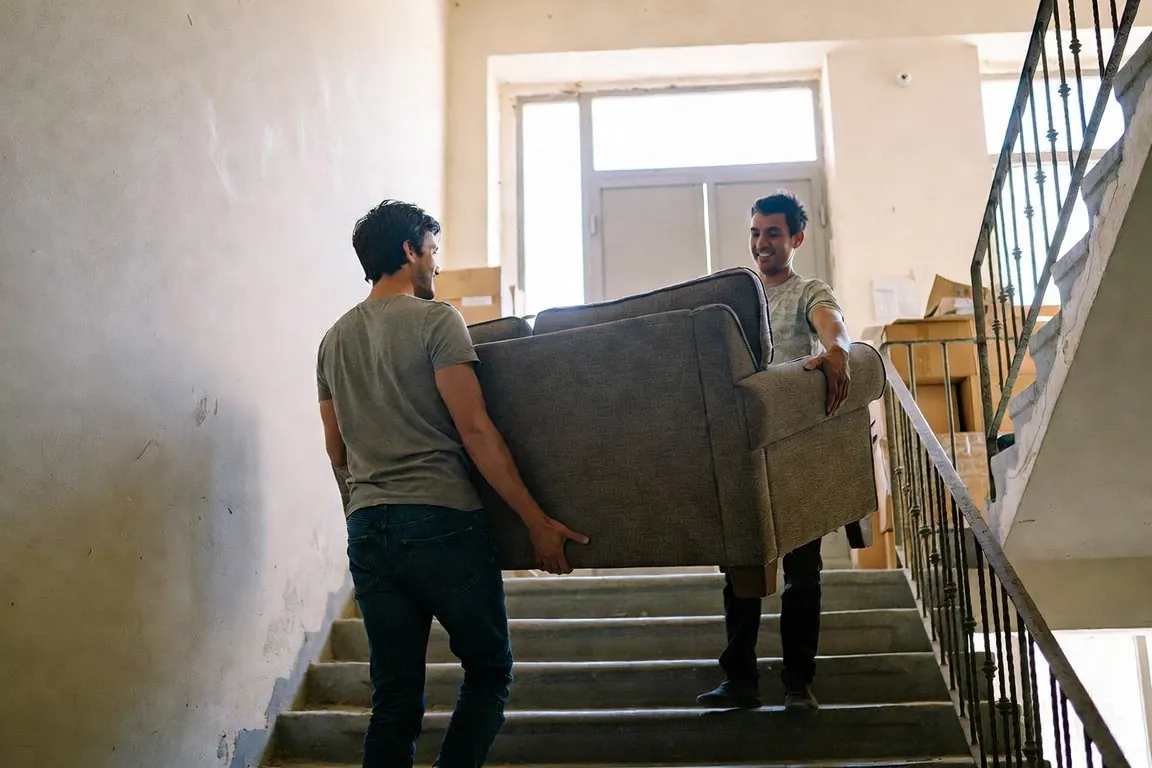
I asked Sarah to help me move once, in the summer of 2014. We had been best friends for eleven years at that point. She said yes the way she always said yes when I asked her for anything: immediately, without hesitating, without checking her calendar to see what she was giving up.
The move was from a third-floor walk-up in Portland to a two-bedroom rental in Beaverton, fifteen miles away. I had a U-Haul rented for the day. I had ordered pizza for lunch. I had bought beer for after. I thought I had it figured out.
Sarah pulled her back lifting my couch up the stairs of the new place. The pull was bad enough that she could not stand straight by the end of the day. She left the move early. I drove her home. She was on muscle relaxers for two weeks. She lost work. She was a freelance graphic designer; lost work meant lost income that her then-boyfriend had to cover.
Sarah and I are still friends. But the friendship that came back after that summer was not quite the same friendship. There was an unspoken ledger that the move had created, and it never really resolved.
This article is about that ledger. The line item that does not show up in the spreadsheet when you compare hiring movers to asking for help. The math nobody does in the moment, that shows up later in ways you do not expect.
What I thought I was asking for
When I asked Sarah to help, I framed it in my head as a small ask. A Saturday. Some heavy lifting. Pizza, beer, banter. The kind of thing friends do for each other.
What I was actually asking for, when I added it up later:
- Eight hours of her Saturday. She was thirty-two; her Saturdays were finite.
- Physical labor at a level she did not normally do. She was a designer. Her body was not built for moving furniture up three flights.
- Financial risk. She did not have employer-paid sick leave. An injury meant lost income.
- Emotional labor. The patience to be cheerful when I was stressed about the move. The grace to not complain when I was unprepared.
- Reciprocal obligation. She would now feel some obligation to ask me back when she moved next, which was its own complication because I was not as physically capable as she was.
I was asking for one Saturday and a couple of hours of furniture lifting. I was, in a deeper accounting, asking for several hundred dollars of her income, several days of her physical wellbeing, and a small portion of our friendship's emotional savings.
I would not have asked if I had calculated it that way. The reason I did ask was that the calculation never happened. The frame was too casual to require it.
What the math actually looked like
I went back and added it up afterward, when I was trying to understand why the friendship felt different.
My visible savings:
- Saved roughly $1,200 vs hiring movers ($800-$1,400 was the typical range for a 15-mile move with my furniture in 2014).
- Saved the planning effort of vetting moving companies.
Sarah's actual cost:
- Two weeks of lost work as a freelancer: $1,800-$2,400 of foregone income.
- Two weeks of physical pain and discomfort.
- Several hundred dollars in muscle relaxer copays and physical therapy.
Our shared cost:
- A small but persistent strain on the friendship that took, in retrospect, about three years to fully recover from.
- A reluctance on her part to say yes to subsequent asks, even small ones.
- A reluctance on my part to ask, which meant fewer of the small mutual exchanges that previously kept the friendship close.
I saved $1,200. The cost to her was higher than that just on the visible income loss. The cost to us was harder to measure but real.
Why this happens
I have thought a lot about why this kind of math gets done so badly when friends help with moves.
Part of it is that asking-for-help feels neutral when the help is small and immediate. Help me carry one box. Help me hang one shelf. Watch the dog for an hour. These are real asks but the cost is bounded.
Asking for help with a whole move feels similar in the moment but is not actually similar. The cost is high and the variance is unpredictable. Most moves go fine. Some moves involve injury, breakage, lost work, family-emergency interruptions. The asker does not know in advance which kind of move they are going to have. The asked-for friend takes the variance.
Part of it is that money is hard to convert to friendship and friendship is hard to convert to money. The asker is implicitly trading dollars (their money saved by not hiring) for friendship time and goodwill. The friend is trading their time, body, and goodwill for the experience of helping (and pizza and beer). The exchange rate is bad in one direction (friendship is worth more than $1,200 of moving help) and unclear in the other.
Part of it is that the asking culture for moves is generations old. Your parents asked their friends. Their friends helped. Nobody got injured because everyone was thirty and the moves were small and the freight insurance industry hadn't yet invented the modern household.
The world has changed. Adult life now happens later in life. The thirty-eight-year-old being asked to help with the move is meaningfully different from the twenty-eight-year-old who was asked at the same friendship's earlier stage. The thirty-eight-year-old has a kid, a mortgage, a back issue, and a spouse who would prefer they not spend Saturday lifting other people's furniture.
The asking has not adjusted. The cost has gone up.
What I would do differently now
I am older now. Sarah is too. I have moved twice more since 2014 and not asked her or anyone to help. The thinking changed.
When I have moved since:
- I have hired movers every time. The cost has been significant, sometimes $3,000-$5,000 for a long-distance move. Smaller for local. The amount has hurt to spend.
- I have not pulled my back. I have not put another person at risk of pulling theirs. I have not asked anybody to give up a Saturday.
- I have invited friends to help unpack instead. Unpacking is a different kind of ask. It is shorter. It is lower stakes. It can be done in an hour over coffee. It builds the friendship instead of stressing it.
The unpacking gathering has become my replacement for the moving day. Friends come over a week after the move with food and help break down boxes, hang artwork, and figure out where the kitchen things go. It is fun. It feels like welcoming people into the new place. Nobody pulls their back.
This is a small reframe, but it is the one that actually works.
What I tell people now
When friends ask me whether they should ask people to help them move, my answer is now consistent: do not ask. Hire movers. Invite friends to help unpack instead.
The economics of hiring movers are usually better than people realize, especially when you account for the time, breakage, and injury costs that DIY moves carry. For a thorough breakdown, see Hire Movers vs DIY: The Real Math on our sister site Moving Crews.
The friendship economics are more important than the financial economics. The dollars saved by asking friends are real but small. The friendship cost is harder to measure but often larger.
Some people will read this and say I am being too cautious. Some will say their friends were happy to help and the moves went fine. They are not wrong about their specific friends and their specific moves. The pattern I am describing is statistical, not universal. Most asks go fine. Some go badly. The badly ones are the ones I am trying to help readers avoid.
If you are reading this and you are about to ask a friend to help you move, consider the alternatives. Could you afford to hire? Could you do it with paid day-laborers from a service like Moving.biz's labor-only options? Could you do a smaller move yourself with no friend involvement?
Most of the time, one of these alternatives is workable. Take it. Save the friend ask for the unpacking party.
Sarah and I
Sarah and I are still friends. Eleven years on now since the move, our friendship is good. We have weathered the strain. The relationship found a new equilibrium that included the move as a known event we have processed.
But it is also true that the friendship is different than it would have been if I had not asked. There is a small piece of caution between us that did not exist before. She is slower to say yes to my asks. I am slower to make them. We are still close, but we are close in a different way than we were when we were thirty-two.
I would not have made the trade if I had calculated it correctly going in. The $1,200 I saved is gone now and was gone within months. The small piece of caution is still here, eleven years later.
That is the math nobody puts in the spreadsheet. That is the line item the moving services do not advertise. That is what I want readers of this site to know before they make the same call I made.
Frequently Asked Questions
Should I ask friends to help me move?
My honest answer is no. The dollars you save by asking are real but usually small, while the costs that don't show up in the spreadsheet (injury risk, lost work for the friend, and quiet strain on the friendship) are harder to measure and often larger. A safer move is to hire movers or labor-only day help for the heavy lifting, then invite friends to a low-stakes unpacking gathering afterward. That builds the friendship instead of straining it.
Is it cheaper to hire movers or do it yourself?
DIY looks cheaper on paper but the gap narrows once you account for truck rental, fuel, equipment, your own time, breakage, and the real risk of injury. A local move with movers often runs in the hundreds to low thousands; a long-distance move can be $3,000 to $5,000. When you price in everything DIY actually costs, hiring is frequently better value than people expect.
How do I choose a reputable moving company?
For interstate moves, verify the company is registered with the Federal Motor Carrier Safety Administration and has a valid USDOT number before you book. The FMCSA's consumer site Protect Your Move lets you check a mover's registration and complaint history and explains your rights. Get written estimates, avoid large upfront deposits, and read reviews from customers who filed actual claims.
What is labor-only moving help?
Labor-only help means you hire workers to load and unload while you provide the truck (often a rental). It costs less than full-service moving but still keeps the heavy lifting off your friends and off your own back. It is a good middle option when full-service movers are out of budget but a pure DIY move feels risky.
How can I avoid moving scams?
Be wary of movers who demand a large cash deposit, refuse to do an in-home or video estimate, or will not provide a written contract. The FMCSA and the Federal Trade Commission both recommend getting everything in writing, confirming registration, and understanding the difference between a binding and non-binding estimate before you sign. Reputable movers are transparent about pricing and your rights.
Further reading
For the financial analysis that backs this up, see Hire Movers vs DIY: The Real Math on Moving Crews. For the consumer-affairs framing of the moving-industry decision, see The Long-Distance Move: Why You Should Hire It Out on HomePlan HQ.
For the broader pattern this story belongs to, see Why Homeowners Lose Sleep (And What Helps) and Your First 90 Days as a Homeowner.