AC Compressor Replacement Cost in 2026
Quick answer: A residential AC compressor replacement runs $1,200 to $2,800 all in for 2026, parts and labor combined. Older R-22 systems can cost far more once refrigerant is added in, and some "compressor failures" turn out to be a $20 capacitor, so get the diagnosis itemized and a second quote before you sign anything.
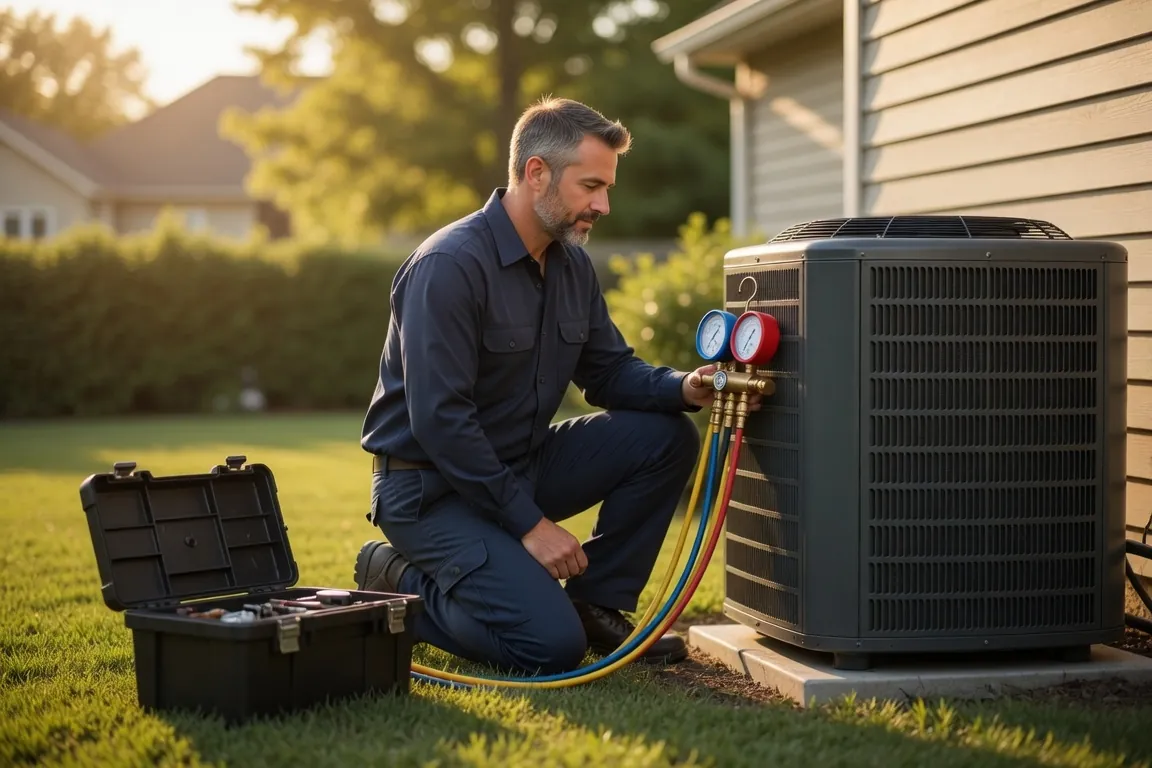
The first time an HVAC tech handed me a quote for $2,500 to replace an AC compressor, I sat in my own kitchen and felt my chest get tight. Not because I could not afford it eventually, but because the moment was so sudden. The house had been fine yesterday. The thermostat had been climbing all morning, the upstairs was already 81 degrees, and the man in my driveway was waiting for me to nod yes or no while my dog watched us both from the rug.
I want to tell you what that number actually means in 2026, what drives it up or down, and what I would have done differently if someone had walked me through it before the tech ever arrived. Because here is the part nobody tells you when you are standing in your hallway holding a printed estimate: the quote is the start of a conversation, not the end of one.
Here is where the money actually goes in 2026, broken out so the number on your quote stops feeling like a mystery.
| Cost component | Typical 2026 range | What it covers |
|---|---|---|
| Compressor part only | $400 to $1,800 | Single-stage $400 to $900; two-stage $600 to $1,400; variable-speed $800 to $1,800+ |
| Labor | $400 to $1,200 | 4 to 8 hours at $75 to $200/hr; tight attic or boxed-in units cost more |
| Refrigerant recharge (R-410A) | $150 to $400 | R-410A is phasing down in 2026, so the per-pound price is climbing |
| Refrigerant recharge (R-22, pre-2010 systems) | $500 to $2,400+ | $100 to $200 per pound; a system holds 5 to 12 pounds, often more than the part itself |
| All-in compressor replacement | $1,200 to $2,800 | Parts and labor combined; larger systems can exceed $3,000 |
| Capacitor or contactor (the misdiagnosis check) | under $200 | A $20 to $30 part; verify this before paying for a whole compressor |
| Full system replacement (12+ yrs or R-22) | $5,000 to $10,000 | Often the smarter call once the unit is past 12 years |
| With a home warranty | $75 to $125 service fee, plus any amount over the cap | Caps typically run $1,500 to $3,000; pre-existing exclusions apply |
*Figures are 2026 ranges from Angi, HomeGuide, and the U.S. Department of Energy's central air conditioning guidance. Local labor rates, tonnage, and refrigerant type move the number a lot, so get an itemized quote to confirm current pricing.
The honest cost range in 2026
For a residential AC compressor replacement this year, you are looking at $1,200 to $2,800 all in, parts and labor combined. That is the realistic middle of the road. Some homeowners will see quotes lower than that. Plenty will see quotes higher. The variation is not random, and it is not always a sign that someone is trying to take advantage of you, although sometimes it is.
The compressor itself, just the part, runs $400 to $1,200 depending on tonnage and brand. A 1.5 ton unit serving a small condo costs less than a 4 ton unit cooling a 2,800 square foot two-story house. Carrier, Trane, and Lennox compressors tend to sit at the higher end of the part cost. Goodman and the off-brand replacements run cheaper.
Labor is the other big chunk: $400 to $1,200 again, depending on how accessible your unit is, how long the recovery and recharge takes, and whether the tech has to wrestle with a tight attic install or a unit boxed in by a deck someone built around it ten years ago. Add refrigerant recovery, evacuation, and recharge to that, and you understand why the same job can cost $1,400 at one house and $2,600 at the next.
The ranges I am giving you are based on what HVAC companies are quoting in the spring of 2026. I keep an eye on this because I have a friend in Tacoma who runs a small heating and cooling company, and she lets me look over her shoulder at her invoice software when I ask nicely.
The R-22 problem nobody warns you about
If your AC system was installed before 2010, brace yourself for a separate conversation that has nothing to do with the compressor itself. Older systems used a refrigerant called R-22, and R-22 is being phased out. Production stopped in 2020 in the United States, and what is left in the supply chain is what is left.
The practical effect: R-22 recharge alone is now running $100 to $200 per pound. A residential central AC system holds 5 to 12 pounds of refrigerant. Do that math and the recharge by itself can be $500 to $2,400 on top of the compressor work. I have seen friends get quotes where the refrigerant cost more than the compressor.
This is the moment when many homeowners stop and ask the harder question: am I throwing good money after bad? If your system is 12 years old, runs on R-22, and the compressor just gave out, repairing it is often not the smart play. The next failure is coming, and the refrigerant cost will hit you again. A good HVAC tech will tell you this without you having to pry it out of them. A less honest one will quote you the repair and book the appointment.
Repair or replace the whole system
Once your AC unit gets past the 10 to 12 year mark, the conversation shifts from "what does the compressor cost" to "is it time to replace the whole system." I want to be careful here, because plenty of HVAC companies make better margin on full system replacements than on compressor swaps, and some will push you toward replacement when a $1,500 repair would have served you fine for another five years.
But the math does favor full replacement in specific situations. A new central AC system runs $5,000 to $10,000 installed for a residential single-family home. That is a real number, and it stings. The reason it can still be the right call: SEER ratings have climbed substantially. A new system at SEER 16 or 18 will typically cut your cooling electricity bill by 20 to 40 percent compared to a 12 year old SEER 10 unit. Over 8 to 10 years, those savings often pay back the difference between repair and replacement.
If your system is under 8 years old, the answer is almost always: repair the compressor. If it is over 12 years old and runs R-22, the answer is almost always: replace the system. The 8 to 12 year window is the gray zone where you actually have to think about it.
Where a home warranty changes the picture
This is the part I wish someone had laid out for me before that first $2,500 quote. A lot of home warranty plans cover AC compressor replacement, with coverage caps typically running $1,500 to $3,000 depending on the plan tier. The way it works in practice: you pay a service fee, usually $75 to $125, when the contractor shows up. The warranty company pays for the covered repair up to the cap. You pay any difference above the cap.
So in the scenario I described at the top, where the quote was $2,500, a warranty with a $2,000 compressor cap and a $100 service fee would have meant my out of pocket was $600 instead of $2,500. That is the case for warranties when they work.
I want to be honest about when they do not work, because watching homeowners feel betrayed by a denial is one of the things that pushed me toward writing about this stuff in the first place. Warranties exclude pre-existing conditions. If you sign up for coverage today and your compressor fails in three weeks, you are going to face questions about whether the unit was already failing when you bought the policy. There is also a standard 30 day waiting period on most plans before any coverage takes effect at all. Buying a warranty after the AC has started making bad noises is not a strategy. It is a denial waiting to happen.
The best time to have a warranty is when nothing is wrong yet. The second best time is when you are buying a house and the seller is paying for the first year as part of the deal. The worst time, the one where it almost never pays off, is the week after something has already broken.
Practical first steps when the quote arrives
If you are reading this with a quote sitting on your kitchen counter right now, here is what I would do before I signed anything.
Get three quotes. I know you do not feel like calling two more companies. Call them anyway. The spread between the highest and lowest quote on the same job is often $800 to $1,500. That is real money for a phone call.
Ask for the diagnosis to be itemized. Parts, labor, refrigerant recovery, refrigerant recharge, any service or trip fees, broken out separately. A tech who will not itemize is a tech I do not want touching my furnace either.
Verify the diagnosis itself. Some "compressor failures" are actually capacitor failures or contactor failures. A capacitor is a $20 part. A contactor is a $30 part. Labor on either is under an hour. The total fix is often $200 or less. If the first tech said compressor and the second tech says capacitor, that gap is not bad luck. That is the difference between an honest tradesperson and one who is reading you for what you will pay.
Check the manufacturer warranty on the compressor itself. This is the one almost nobody knows about. Carrier, Trane, Lennox, and most other major brands offer a 10 year parts warranty on the compressor specifically, but only if the original owner registered the unit within 90 days of installation. If you bought the house from the previous owner, the registration may or may not transfer, but it is worth 15 minutes on the manufacturer website to check. I have known homeowners who paid full price for a part that should have been free.
What I actually tell my friends now
When someone calls me in a panic about an AC quote, I ask them three things. How old is the system. What refrigerant does it use. Do you have a home warranty.
If the answers are: under 10 years, R-410A, no warranty, then the path is clear. Get three quotes. Pay for the compressor replacement. Move on with your summer.
If the answers are: over 12 years, R-22, no warranty, then the path is harder. The repair is technically possible but financially questionable. Run the replacement numbers. Look at financing options if the cash is tight. Decide whether the next five years in this house justifies a new system.
If there is a warranty in the picture, slow down. Read the coverage document, not the marketing page. Find the AC section. Look for the cap, the exclusions, the waiting period, and the language about pre-existing conditions. Call the warranty company before you authorize work, because most warranties require you to use their contractor network, and using your own guy can void coverage on the spot.
The reason this site exists is that the moment a $2,500 quote lands in your hand is the worst possible moment to start learning how home warranties work. The reading is supposed to happen before. The decision is supposed to happen calmly, at the kitchen table, with a cup of coffee, not standing in your hallway with a tech tapping his clipboard.
You do not have to figure it out alone, and you do not have to figure it out fast. Get the second quote. Read the coverage. Sleep on the number. The compressor will still be broken in the morning, and you will be in a better position to do something about it.
Frequently Asked Questions
How much does it cost to replace an AC compressor in 2026?
For a residential system, plan on $1,200 to $2,800 all in, with parts and labor combined. The compressor part itself runs $400 to $1,200 depending on tonnage and brand, and labor adds another $400 to $1,200 depending on how accessible your unit is. The same job can honestly cost $1,400 at one house and $2,600 at the next.
Is it worth replacing just the compressor or the whole system?
If your system is under 8 years old, replacing just the compressor is almost always the right call. If it is over 12 years old and runs the old R-22 refrigerant, replacing the whole system (which runs $5,000 to $10,000 installed) often makes more sense, because a newer high-SEER unit can cut your cooling bill by 20 to 40 percent and the next failure is already on its way. The 8 to 12 year window is the one where you genuinely have to sit and think.
Why is R-22 refrigerant so expensive now?
R-22 production stopped in the United States in 2020, so what is left in the supply chain is all there will ever be. Recharge now runs $100 to $200 per pound, and a central system holds 5 to 12 pounds, so the refrigerant alone can cost more than the compressor on an older unit. You can read about the phase-out at energy.gov.
Does a home warranty cover AC compressor replacement?
Many home warranty plans do cover compressor replacement, with caps typically running $1,500 to $3,000 and a service fee of $75 to $125 per visit. The catch is that warranties exclude pre-existing conditions and have a standard 30-day waiting period, so buying one after your AC has started making bad noises will not help. Just remember a home warranty is a service contract, not insurance (consumer.ftc.gov).
Could my "compressor failure" actually be something cheaper?
Yes, and this is worth checking before you spend thousands. Some failures diagnosed as the compressor are really a failed capacitor (a $20 part) or contactor (a $30 part), with the whole fix often under $200. If one tech says compressor and a second says capacitor, that gap is exactly why a second opinion is worth the phone call.
Is coverage worth setting up while the compressor still works?
That is the only time it works, honestly. The waiting period and pre-existing exclusion mean a warranty bought after the grinding noise starts will not pay for that compressor. If yours is past its eighth summer and still running fine, this is the buyable window. → Get a Choice Home Warranty quote. The cap on HVAC runs about $3,000, which covers most of the compressor prices on this page. Quote is online and the contract arrives by email before any payment.